By Ivan Kalin · Local SEO Expert & Founder at Clientomic
Published June 19, 2026
If you still say "Google My Business," you are not alone. Google now uses "Google Business Profile" in its help docs and product workflow.[1][2] A local listing is the wider bucket. It covers your Google profile and every other place your business details appear online.
That is the simple answer. The practical answer is more useful: your Google Business Profile is usually the listing that matters most, but it is not the only listing customers and search engines check before they call.
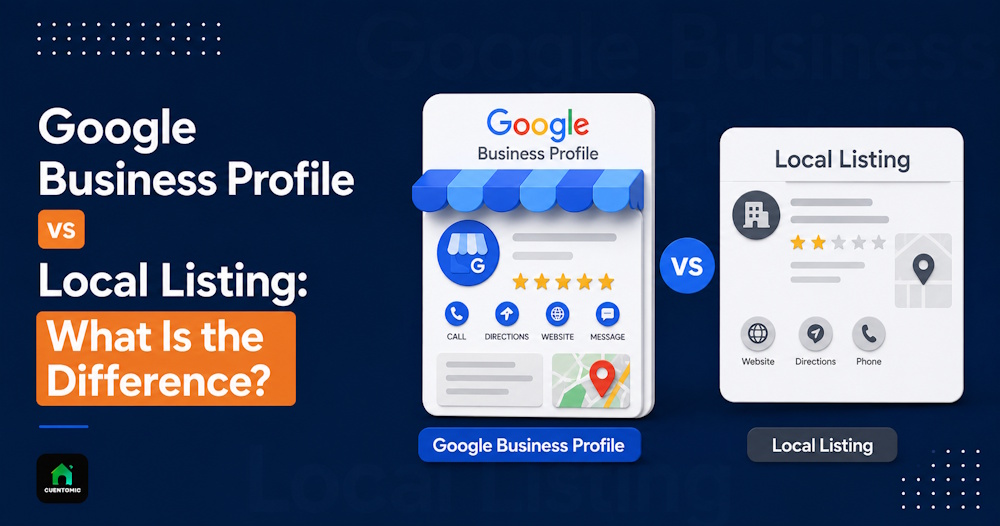
Google Business Profile is one specific local listing that lives on Google's own surfaces: Search and Maps. A local listing is the broader category for any business profile that helps customers discover you on a map, directory, review site, or search engine. That means every Google Business Profile is a local listing, but a local listing can also live on Apple Maps, Yelp, Bing Places, or a niche directory your customers trust. Google describes a Business Profile as your local storefront and online listing on Google, while Yext and Semrush use "local listing" to describe the wider ecosystem of online profiles beyond Google alone.[1][4][5] For an owner, the practical distinction is simple: Google Business Profile is one asset you manage directly on Google, while local listings are the larger network of business records customers may compare before they call. If you only manage Google, you are managing your most important listing, not your entire local presence.
The confusion usually happens because people use the most visible listing as shorthand for the whole category. A plumber might say, "I need to fix my Google listing," when the real problem also includes Apple Maps, Yelp, Bing Places, or an old directory profile with the wrong phone number.
The cleaner way to think about it is this:
| Term | What it means | Where it lives | Why it matters |
|---|---|---|---|
| Google Business Profile | Your business profile on Google's own surfaces | Google Search and Google Maps | Controls how you appear on the platform most local buyers use first |
| Local listing | Any profile that shows your business details online | Google, Apple Maps, Yelp, Bing, industry directories, review platforms | Supports discovery, consistency, and trust across the wider local ecosystem |
Google matters most for many small businesses. But "Google" and "all local listings" are not the same job.
Google My Business is the same product with an outdated name, so when an owner says "Google My Business," they almost always mean the product Google now calls Google Business Profile. The important difference is not between two separate tools. It is between legacy wording and Google's current product name. Google moved the management workflow into Search and Maps and now documents the product as Business Profile across its help center and Search Central guidance.[1][2][3] So if someone on your team still says GMB, they are usually pointing at the same Google-managed profile, just with outdated language. This matters because current setup instructions, support docs, and optimization checklists all use the newer name. Using the current term keeps your internal notes, vendor conversations, vendor requests, and training materials aligned with how Google explains the product today, which reduces confusion when you need support or hand work to someone else.
This matters because current documentation, support instructions, and optimization workflows all use the newer term. Google says a Business Profile helps you manage how your business shows up on Maps and Search at no charge, and says verified profiles help customers find you and build trust.[2]
So if you hear these phrases, treat them like this:
If you are training staff, writing SOPs, or cleaning up vendor notes, it is worth switching your language now. Clear terms reduce sloppy work.
A local listing is any profile that carries your core business information on a discovery surface customers actually use. That includes Google, but it also includes Apple Maps, Bing Places, Yelp, major directories, review platforms, and industry-specific sites where buyers compare local options. Yext defines local listings as online profiles across search engines, directories, review platforms, and more, while Semrush describes a local business listing as an online profile for a business and treats Google Business Profile as one example inside that wider set.[4][5] The key idea is that a local listing is not defined by who owns the platform. It is defined by what the profile does: it helps a nearby customer confirm that your business exists, what you offer, where you serve, and how to contact you. If a customer can discover you there and use it to decide whether to call, it functions as a local listing.
What shows up in a local listing depends on the platform, but the usual fields are familiar:
That is why the difference is more than semantics. If your Google Business Profile is perfect but your Apple Maps listing has old hours and your Yelp profile still shows the wrong suite number, customers do not experience your business as "accurate." They experience it as inconsistent.
For a broader setup baseline, start with Google Business Profile setup and then look at the rest of your listings as supporting infrastructure, not side quests.
A Google Business Profile is a full business profile you manage on Google. A local citation is a mention of your business information on another site, usually built around your name, address, and phone number. BrightLocal defines local citations as online mentions of a business's key contact details across websites, directories, maps, apps, and social platforms.[6] A citation can support your local presence, but it is not always a complete, owner-managed profile with categories, photos, reviews, products, and service details. That is the operational difference owners need to keep straight. A profile is something you can actively maintain. A citation may simply be a data point published elsewhere. Some listings contain citation data, but citation and profile are not interchangeable terms, which is why "fix my citations" and "optimize my Google profile" are related jobs, not the same one.
This distinction matters because owners often mix up three different things at once: a profile you actively manage, a listing that exists whether you manage it or not, and a citation that simply repeats your business details.
A Google Business Profile is all three at once in some conversations, which is why people get lost. But operationally, they are different.
If you want the short version: Google Business Profile is one important listing. Listings often contain citations. Citations are not the same as your full Google profile.
Listing consistency affects discovery, trust, and conversion. Because customers do not verify your business in one place. They cross-check, and search platforms do too. Yext says 63% of consumers are less likely to engage with a brand if listing information is incorrect.[4] That means consistency is not a cosmetic cleanup task. It affects discovery, trust, and the moment a customer decides whether to call. If your Google profile shows one phone number, Apple Maps shows another, and a directory has outdated hours, the customer sees confusion instead of reliability. Google may be the main platform, but consistency across the wider listings ecosystem protects trust after the search and lowers the odds that a buyer abandons you for a cleaner-looking competitor.
This is where a lot of small businesses lose the plot. They think, "My Google profile looks fine, so local visibility is handled." But the buyer who finds you on Google can still double-check Apple Maps, Yelp, or a niche directory before calling.
Inconsistency causes practical problems:
That is also why Google is the priority, not the whole system. A strong Google profile without supporting consistency is better than nothing. It is not the same as being fully managed.
Google Business Profile should be the first priority because it controls how you appear on Google Search and Maps, but local visibility is larger than one platform. Yext notes that when consumers use mobile to search for a local company, 88% either call or visit within 24 hours.[4] That is high-intent behavior, and high-intent buyers do not always stop after one lookup. They often confirm what they saw on Google against another trusted surface before acting. If those details disagree, the discovery does not reliably convert. The practical takeaway is that Google deserves the most attention, but supporting listings still matter because they help protect trust, reduce confusion, and keep your business details aligned wherever the customer double-checks you before they commit.
For a single-location business, the practical priority is straightforward: your Google Business Profile should be accurate first, and the other listings your customers actually use should match it closely enough that nobody sees conflicting details.
That last step is where many owners get stuck. Local listings are not hard to understand. They are hard to keep current while you run the business.
Clientomic makes that easier — it’s a done-for-you local visibility service that manages Google Business Profiles for small service businesses so they get found on Google Search, Maps, and AI assistants.
If you want the Google side explained first, who should create a Google Business Profile is a good starting point. If you want the ongoing work handled, the Google Business Profile optimization service can take it off your plate.
It is ongoing work. Google says you can manage how your business appears on Maps and Search, update hours, contact details, and location information, and keep your presence current over time.[2] Search Central points owners to business-details management as the way to control how the business appears across Google surfaces.[3] That means the job is not done when a listing exists. The job is done only when the information stays accurate as the business changes. Hours shift, service areas expand, categories need cleanup, photos age, reviews need responses, and third-party platforms sometimes introduce outdated or duplicate data. A one-time setup can get you visible. It does not keep you accurate. That is why listing management behaves more like maintenance than a checklist item you finish once and forget, especially if more than one platform can shape a buyer's first impression.
This is the operational difference between "I have a profile" and "my visibility is managed."
A one-time setup can get you on the board. It cannot handle:
For a busy owner, that is the real answer behind this terminology question. You do not just need the right noun. You need the right maintenance habit.
In practice, I treat listing management as a recurring operations queue, not a launch task: once hours, categories, photos, and duplicate data start drifting, the profile becomes a maintenance problem that has to be owned every month.
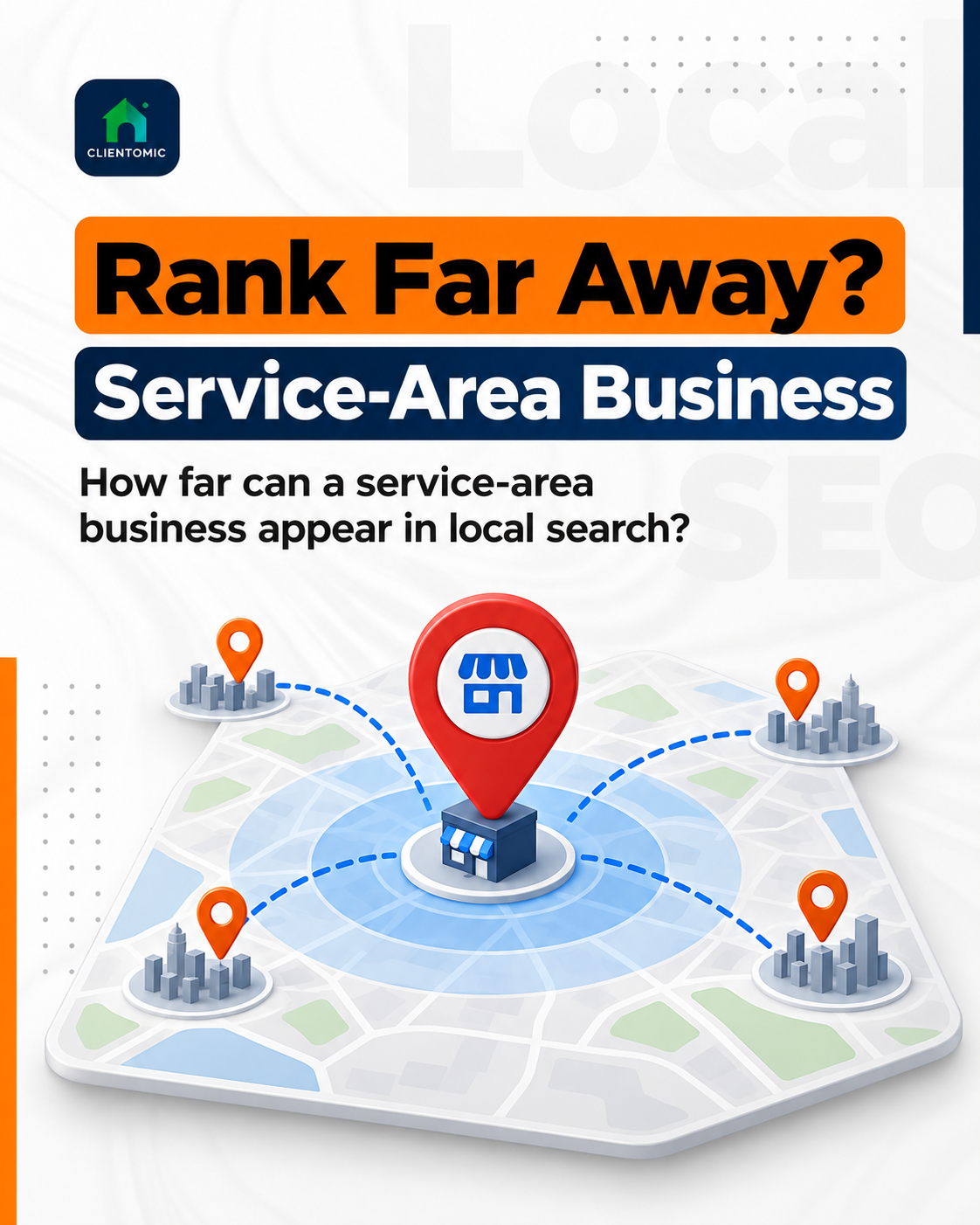
When I review service-area accounts at Clientomic, I do not assume a wider radius will improve rankings. The profile still tends to earn visibility closest to the business's operating core, so the monthly job is to keep the core signal clean rather than chase a bigger map footprint.
People still say it, but Google uses "Google Business Profile" in its current help documentation and product workflow.[1][2] Use the newer term in your process documents, vendor notes, and training.
Yes. A Google Business Profile is one type of local listing. The larger category also includes listings on Apple Maps, Bing, Yelp, and other business directories.[4][5]
Usually yes. Google is the first priority, but supporting listings still shape trust, consistency, and conversion when customers compare details across platforms.[4]
A listing is the full profile a customer sees. A citation is the mention of your business details, often your name, address, and phone number, on another site.[6]
Yes. Google supports service-area businesses that visit customers in person, and those businesses can manage how they appear in Search and Maps without operating like a walk-in storefront.[2]
Fix Google first if it is broken. Then align the rest of your major listings quickly so your phone number, hours, and service details match wherever customers check.
Google Business Profile is one local listing. A local listing is the bigger ecosystem around your business. If you want that ecosystem handled without turning it into a second job.
Sources:
1. Google Business Profile Help, explanation of Business Profile as a local storefront and online listing on Google, 2026. Read the help article
2. Google Business Profile Help, getting started with Business Profile and how it appears on Search and Maps, 2026. Read the setup guide
3. Google Search Central, guidance on establishing business details and claiming a Business Profile, 2026. Read the documentation
4. Yext, definition of local listings plus statistics on listing completeness, engagement, and local discovery behavior, 2026. Read the explainer
5. Semrush, definition of a local business listing and explanation that GBP is one example of the broader category, 2025. Read the article
6. BrightLocal, definition of local citations as online mentions of business details across websites, directories, and apps, 2025. Read the guide