By Ivan Kalin · Local SEO Expert & Founder at Clientomic
Published July 31, 2026
Google Business Profile is the business-managed presence that appears across Google Search and Maps. Google My Business, or GMB, is its former name. The name changed; the owner's job did not.
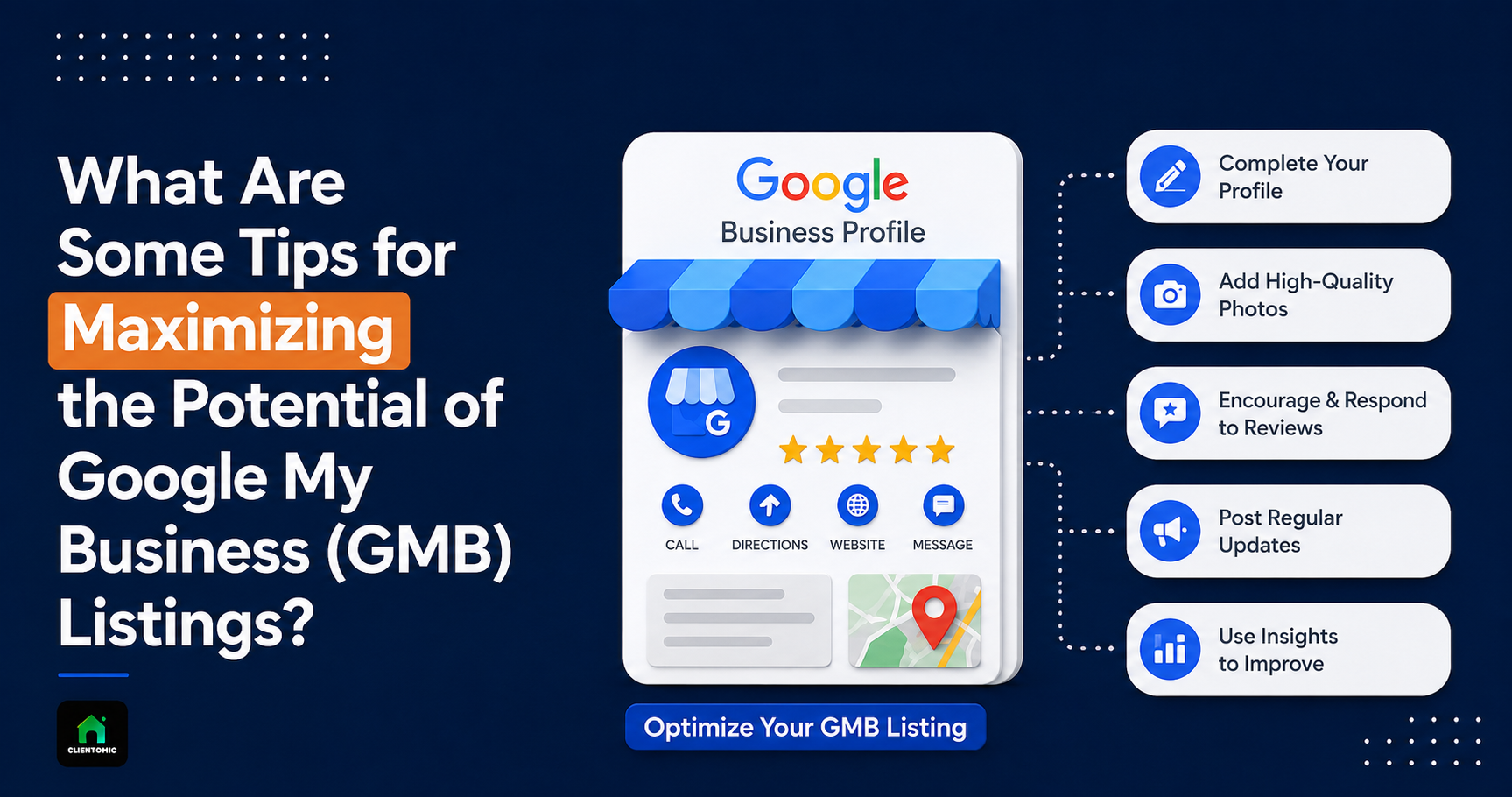
The best Google Business Profile optimization tips follow a risk-first order: secure ownership, match the real business, choose an accurate primary category, describe actual services, keep hours current, add useful original media, handle genuine reviews responsibly, and review the profile after every business change. A complete profile gives Google and customers better information. A maintained profile keeps that information dependable. Google says complete and accurate profiles are more likely to appear for relevant local searches, while local results still depend mainly on relevance, distance, and prominence (Google Business Profile Help, 2025).[2] Google also states that a business cannot request or pay for a better local ranking. Profile work can remove customer friction and support legitimate discovery. It cannot promise a position, call volume, or customer volume.
The customer journey now starts in more places. Search Engine Land found that 37% of surveyed consumers began searches with AI tools (Search Engine Land, 2026).[3] BrightLocal found that AI use for local recommendations rose from 6% to 45% in one year (BrightLocal, 2026).[4] Clear business facts must remain consistent wherever a customer begins.
| Priority | Owner action | Customer-facing effect | What not to promise |
|---|---|---|---|
| 1 | Verify ownership | The owner controls edits | Instant visibility |
| 2 | Correct core facts | Fewer wrong calls or visits | More customers |
| 3 | Choose the closest category | A clearer service match | A fixed position |
| 4 | Add real services | Faster qualification | Unrelated reach |
| 5 | Publish current media | Better expectations | Automatic trust |
| 6 | Handle reviews and Q&A | Useful public context | A perfect rating |
| 7 | Recheck after changes | Fewer stale details | Permanent performance |
Google Business Profile optimization is not a ranking guarantee; it is the ongoing work of making one verified local business clear, accurate, and useful across Search and Maps.
Fix access and factual accuracy before adding activity. Confirm that the business is eligible, verified, and controlled by the right owner. Resolve duplicate or ownership conflicts. Then correct the real-world business name, phone number, website, regular and special hours, address or service-area setup, primary category, services, and attributes. Profile accuracy means the listing matches the business a customer will actually encounter. Google requires verification before an owner can manage and represent the business fully, and it advises choosing the fewest categories needed to describe the core business (Google Business Profile Help, 2025).[5][6] These foundations help Google understand relevance and help a customer avoid a wrong number, closed location, or unavailable service. They do not override distance, competition, or customer demand.
| Check | Why it matters | Owner action | Customer action to monitor |
|---|---|---|---|
| Access and verification | The owner must control edits | Finish the available verification method | Profile views after approval |
| Duplicate status | Two records can confuse information | Keep the eligible record | Calls to the correct listing |
| Name, phone, hours, website | These facts guide decisions | Match the real business | Calls, visits, and directions |
| Address or service area | The setup must match service delivery | Show an address only when customers visit | Relevant inquiries |
| Primary category | It names the core business | Select the closest available category | Actions from service searches |
| Services and attributes | They help customers qualify the fit | Add only real offerings | Calls about listed services |
If access is the problem, use the guide to Google Business Profile setup. Never compensate for a weak category by altering the real business name.
The details that shorten a customer's decision are an accurate category, specific services, current hours, a realistic service area, useful attributes, a concise description, and original photos or videos that show what the business is like. A discovery search is a query for a category or service, such as "emergency plumber," rather than a known business name. On that kind of search, the profile must answer four questions quickly: Is this the right service? Is the business available? Does it serve this location? What can the customer do next? Google advises owners to provide complete and detailed information so its systems can match profiles to relevant searches (Google Business Profile Help, 2025).[2] Better clarity can support selection. It does not guarantee that the profile will outrank a closer or more prominent business.
| Good signal | Bad shortcut |
|---|---|
| A category that names the core business | A broad category chosen only for reach |
| Services written for customers | Repeating city and keyword variants |
| Hours that match operations | Ignoring holiday hours |
| A realistic service area | Places the team does not serve |
| Real photos of the business and work | Generic stock images |
| A short, factual description | Unverifiable claims |
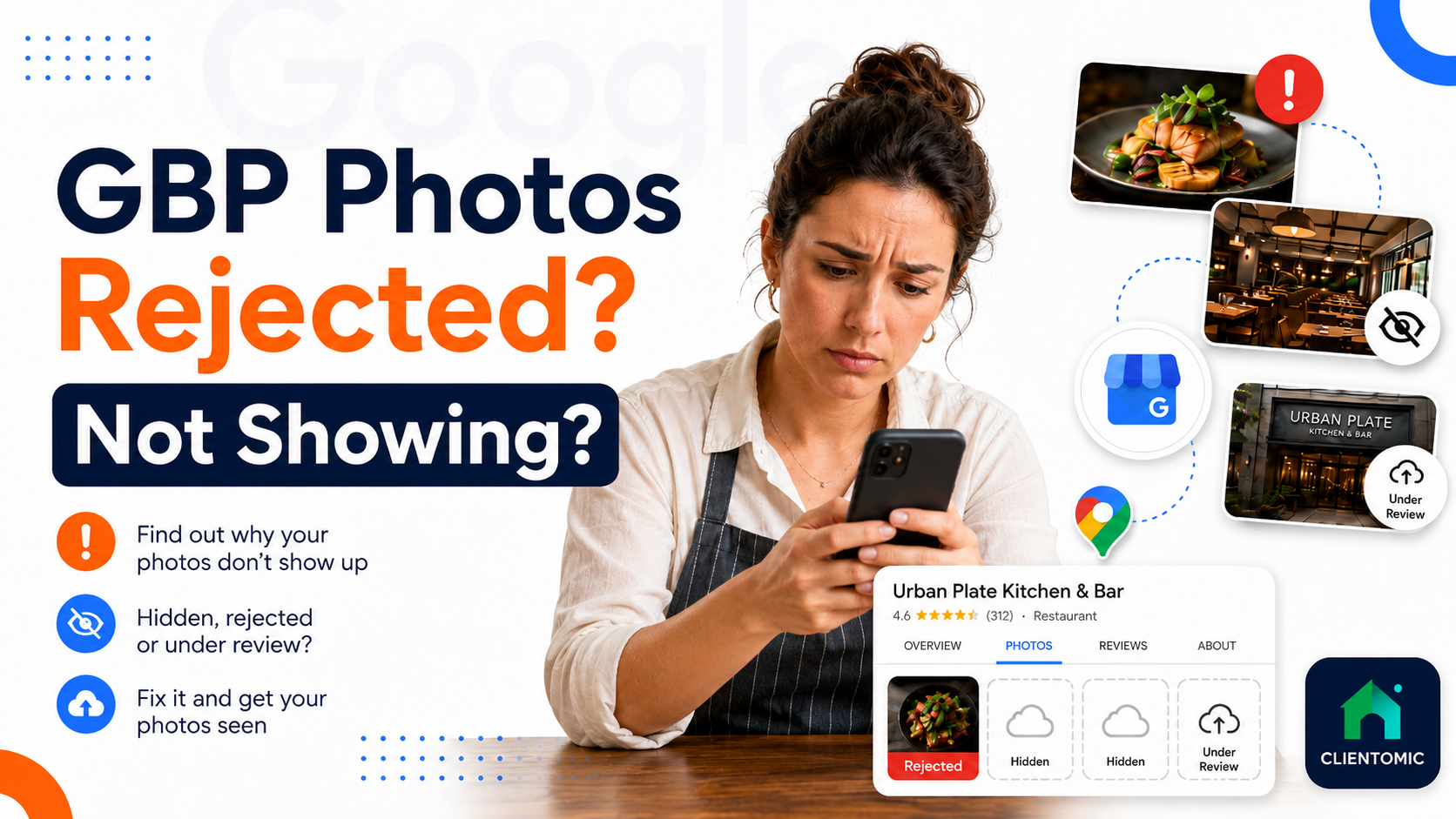
Google recommends photos that are in focus, well lit, and representative of reality (Google Business Profile Help, 2025).[7] Use media to reduce uncertainty.
Use genuine reviews, specific replies, current photos, accurate updates, and relevant Q&A to give customers recent evidence about the business. An owner can ask customers for honest feedback without incentives or pressure, then respond briefly to the experience described. Report reviews that violate Google policy instead of arguing publicly. Add original media that represents the real location, team, vehicles, products, or work. Publish Google Posts when there is a useful change, offer, service note, or seasonal reminder. Keep Q&A factual and customer-centered. BrightLocal found that 96% of consumers were open to writing a business review in its 2025 survey (BrightLocal, 2025).[8] That makes a respectful request process practical, but it does not make review volume a ranking promise. Reviews, media, Posts, and Q&A are trust and maintenance inputs, not guaranteed visibility controls.
Reviewing service-area profile discussions and our audit work, we see at Clientomic steady recent review activity as a stronger maintenance pattern than a larger total that has gone quiet.
Keep the operating rules simple:
Clientomic can monitor and respond within the profile-management scope, but it does not generate or solicit reviews for a business.
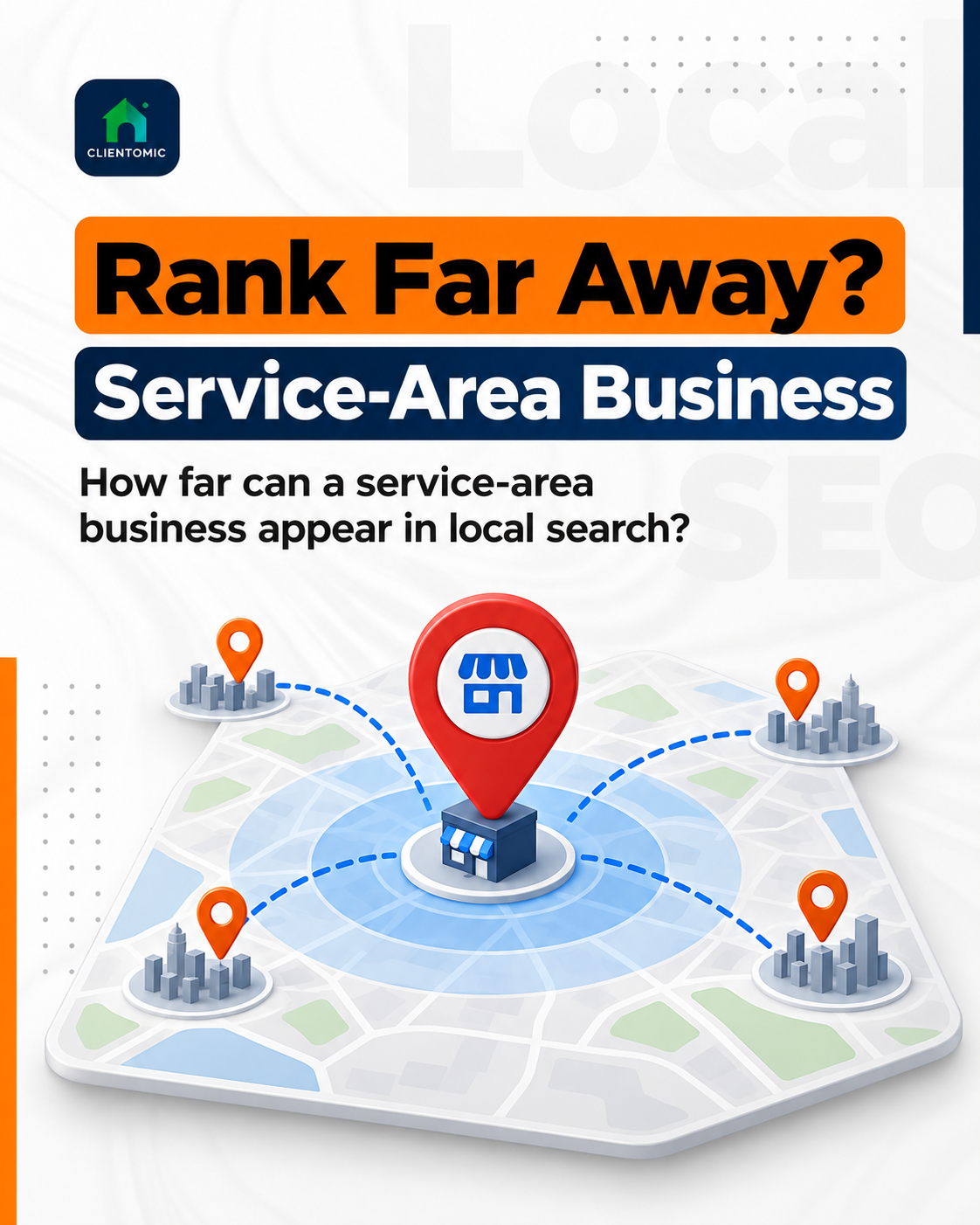
A service-area business should represent its real operating model, remove a public address when customers are not served there, and list only the places it can reasonably reach. A service-area business travels to customers instead of receiving them at a public storefront. A hybrid business serves customers both at its address and away from it. Google allows up to 20 service areas based on cities, postal codes, or other areas and says the overall boundary generally should not extend beyond about two hours of driving time (Google Business Profile Help, 2025).[1] These settings explain coverage to customers. They do not create a ranking radius or guarantee visibility throughout a metro. Google's distance factor still considers how far each business is from the person searching.
A storefront shows the address where customers are served. A hybrid business can show that address and a service area. A home-based plumber should hide the home address.
Across the service-area cases we review, one of the costliest assumptions is that a wider service area creates a wider ranking radius. It usually does not.
Treat "we serve the whole metro" as coverage, not a position promise. Local visibility—how easily nearby customers find and understand a business—still changes with relevance, distance, prominence, competition, and searcher location.
A profile can look complete and still stay quiet because completion is a snapshot, while customer choice and local ranking are changing systems. The primary category may be wrong. Services may be vague. Hours or contact details may be stale. Reviews may be sparse or old. Photos may not show the real business. An unresolved duplicate may confuse the record, or the profile may no longer reflect what the business offers. Even a well-maintained profile cannot control demand, the searcher's distance, competitor prominence, or Google's ranking decisions. Diagnose the facts before assuming one missing field caused the problem. Profile maintenance means keeping the record accurate and useful. It does not mean manipulating rankings. Start with the most plausible operational gap, then test it against real customer actions.
| What looks complete | What may still be wrong | Safe next check |
|---|---|---|
| Every field has text | The category is too broad | Compare it with the core service |
| Hours are present | Special hours are stale | Test the next visit window |
| Services are listed | Names are vague or outdated | Match current customer choices |
| Reviews exist | Recent feedback has stopped | Check the request and reply routine |
| Photos exist | Media is old or generic | Add current original images |
If the profile does not appear at all, use the diagnostic on why a business is not showing on Google Maps. That problem may require verification, eligibility, duplicate, or category checks.
Setup is the starting point; ongoing upkeep is the job. Finish the one-time foundation by verifying ownership, correcting the business record, selecting the right category, and documenting real services. Then review new customer-facing changes as they happen. Check suggested edits, hours, services, reviews, media, and Q&A on a recurring schedule. Publish accurate Google Posts when they are useful, and review profile actions to learn which information customers use. Managed Local Visibility is an operating model in which local profile information and visibility work are maintained for the owner instead of being left as an occasional task. A cadence is a management routine, not a Google ranking rule. Its value is simple: the profile is less likely to drift away from the real business.
| When | Check | Why it matters |
|---|---|---|
| One time | Ownership, verification, duplicates, category, core details | Establish a trustworthy record |
| Weekly | New reviews, Q&A, suggested edits, urgent hour changes | Catch public issues while they are current |
| Monthly | Services, attributes, photos, Posts, customer actions | Keep the profile useful and learn what customers use |
| After any change | Hours, phone, location, service area, offer | Prevent the old business state from remaining public |
The DIY routine works when someone owns it. If it keeps falling behind, see what ongoing Google Business Profile management includes.
Choose the operating model that gives recurring profile work a clear owner. In-house management fits a business with time, access, and a dependable review routine. One-time help can repair ownership, verification, categories, and core information, but those foundations can age as hours, services, media, reviews, and Google features change. Ongoing management assigns that recurring work to a fixed scope and schedule. Clientomic is a done-for-you local visibility service that manages Google Business Profiles for single-location businesses so owners get found on Search and Maps without doing the recurring work themselves. No responsible provider can guarantee a specific position, call volume, or customer volume. The right question is not who promises the most. It is who owns each recurring task and reports what was actually done.
| Model | Best fit | Tradeoff | Questions to ask |
|---|---|---|---|
| In-house | An owner or employee has time and clear access | Profile work competes with daily operations | Who checks edits, reviews, hours, and performance? |
| One-time help | The foundation needs a defined cleanup | Accuracy can decay after the project ends | What is fixed, and who maintains it next month? |
| Ongoing management | The owner wants recurring GBP work assigned | Scope must be clear and repeatable | Which profile tasks are included, excluded, and reported? |
Clientomic's fixed scope covers profile information, services, attributes, Posts, Q&A, monitoring, and reporting. It excludes website development, paid advertising, broader social media management, link outreach, and review generation.
Fix whichever gap creates more customer uncertainty. BrightLocal found that 96% of consumers were open to writing a business review (BrightLocal, 2025), so an honest review request can come first when recent feedback is missing.[8] If customers cannot see the location, team, vehicles, or work, add current original photos first. Neither should come before accurate business details.
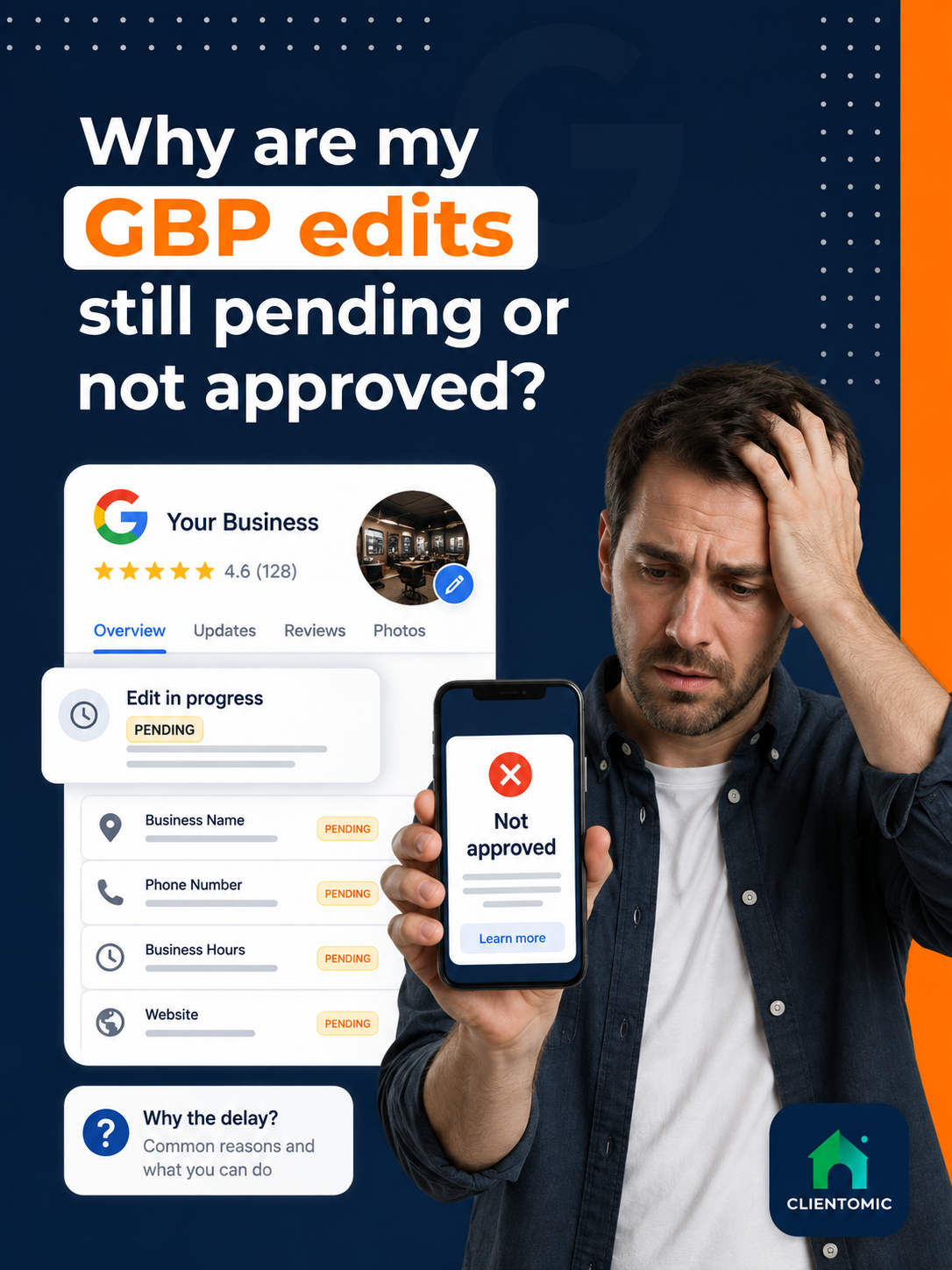
Google says Business Profile edits usually take up to 10 minutes to review, but some pending edits can take up to 30 days (Google Business Profile Help, 2026).[9] Check the edit status before submitting the same change again. The review window is an operational estimate, not a prediction of when visibility or customer actions will change.
Check that the proposed information matches the real business, read the rejection reason, and use Google's appeal route when it applies. Google says an appeal review can take up to 5 business days, and requested evidence may need to be submitted within 60 minutes (Google Business Profile Help, 2026).[10] Prepare accurate documents before opening the evidence form.
Do not create a duplicate profile or make unsupported changes while the appeal is pending. Follow the official appeal process and keep the evidence ready. Google says an appeal decision can take up to 5 business days, while its optional evidence form has a 60-minute completion window (Google Business Profile Help, 2026).[10] Reinstatement is not guaranteed.
Google says a review reply usually takes up to 10 minutes to pass review, although some replies can take up to 30 days (Google Business Profile Help, 2026).[11] A delayed reply is not a reason to repost it repeatedly. Confirm that it follows policy, then monitor the profile for publication.
Google gives the current owner 3 days to respond to an access request (Google Business Profile Help, 2026).[12] If no response arrives, Google may offer an option to claim the profile. Keep the request tied to a legitimate business relationship, follow the instructions in the notification, and avoid creating a second profile.
Google provides a one-time appeal when a flagged review is not removed, and the appeal flow can include up to 10 reviews (Google Business Profile Help, 2026).[13] Select only reviews that violate a stated policy and explain the issue accurately. A negative opinion alone is not a policy violation, and an appeal does not guarantee removal.
Fixing the essentials, building trust signals, and keeping the profile current are ongoing tasks rather than a single project. When that upkeep keeps slipping behind daily operations, an outside team can keep it on schedule.
Sources:
1. Google Business Profile Help, guidance for service-area and hybrid businesses, 2025. Read the guidance
2. Google Business Profile Help, guidance on complete information and local ranking factors, 2025. Read the guidance
3. Search Engine Land, report on consumer search starting points, 2026. Read the report
4. BrightLocal, research on AI use for local business recommendations, 2026. Read the research
5. Google Business Profile Help, verification guidance, 2025. Read the guidance
6. Google Business Profile Help, business category guidance, 2025. Read the guidance
7. Google Business Profile Help, photo and video guidance, 2025. Read the guidance
8. BrightLocal, Local Consumer Review Survey, 2025. Read the research
9. Google Business Profile Help, guidance on Business Profile edit review times, 2026. Read the guidance
10. Google Business Profile Help, appeal guidance for Business Profile content and restrictions, 2026. Read the guidance
11. Google Business Profile Help, guidance on customer reviews and reply review times, 2026. Read the guidance
12. Google Business Profile Help, guidance on ownership requests and duplicate profiles, 2026. Read the guidance
13. Google Business Profile Help, guidance on reporting reviews and one-time appeals, 2026. Read the guidance
Observations sourced from review of public-community discussions on LocalSearchForum, Reddit r/smallbusiness/r/SEO/r/localseo, and Google Business Profile Help Community in 2025-2026, alongside Clientomic's profile-audit and onboarding work. Patterns reflect qualitative observations across multiple independent threads, not specific customer disclosures.