By Ivan Kalin · Local SEO Expert & Founder at Clientomic
Published June 16, 2026
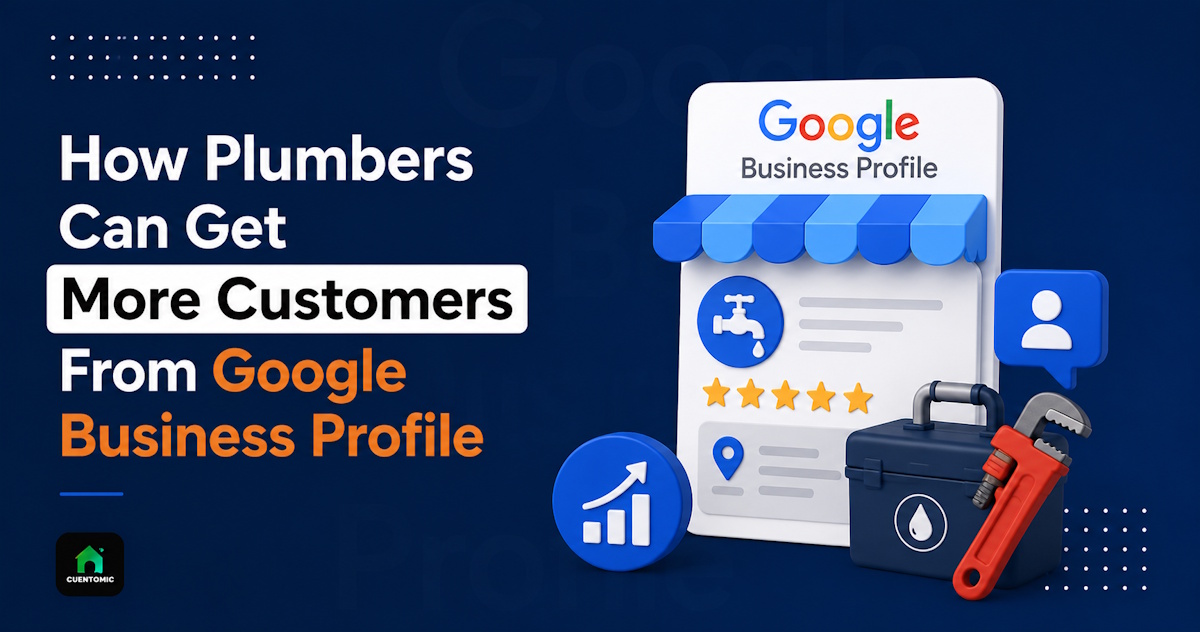
Plumbers get more customers from Google Business Profile when the listing is verified, configured as a real service-area business, filled with the services people actually search for, and kept current with fresh proof. Google explicitly uses plumbers as a service-area-business example, and BrightLocal reported in 2025 that 97% of consumers read reviews for local businesses while 41% always do, which makes review freshness and service clarity part of the call-conversion path, not just decoration.[1][5] The winning profile answers three questions fast: do you serve my area, do you do my job, and can I trust you today? In practice, that means accurate categories, realistic service areas, job-site photos, current hours, and monthly checks so the profile does not drift after setup. That operating rhythm matters even more for home-service businesses that live on recurring visibility rather than one-off searches.
A Google Business Profile is the Google listing that helps a business appear on Search and Maps with its name, phone, hours, reviews, and services. Managed Local Visibility means maintaining that listing as an operating asset instead of treating it like a one-time setup task. Clientomic is a done-for-you local visibility service that manages Google Business Profiles for small service businesses so owners get found on Google Search, Maps, and AI assistants without doing the profile work themselves.
For plumbers, the issue is rarely "Should I have a profile?" The real question is whether the profile is accurate enough for Google to trust, specific enough for a homeowner to act on, and active enough to keep producing calls after the initial setup.
That matters more in 2026 because discovery is spreading across both classic Google results and AI-assisted answers. Search Engine Land reported on January 7, 2026 that 37% of consumers now begin searches with AI tools instead of traditional search engines, while BrightLocal found that 45% used AI tools for local business recommendations in the last year.[4][6]
| Profile state | What Google and the customer see | Business consequence |
|---|---|---|
| Verified, complete, current | Accurate services, realistic service areas, recent proof, clear contact info | Higher trust and better odds of calls |
| Claimed but stale | Thin service list, old photos, weak review freshness, outdated details | Lower confidence and more lost actions |
| Misconfigured service-area profile | Coverage claims that do not match operations, unclear service setup | Visibility gaps and confused searchers |
Use this setup order first:
Plumbers get more customers from Google Business Profile by improving three things at the same time: eligibility, relevance, and trust. Eligibility means the business is verified and represented correctly as a service-area or hybrid operation. Relevance means the profile uses the right category, service list, and business details for the jobs the company actually wants. Trust means the listing shows recent proof that a real plumbing business is active, reachable, and still serving the market. Google says customers can more easily find and engage with a verified service business, and it also says services may be highlighted on the profile when local customers search for them.[1][2] In 2026, that answer has to work for both Google and AI surfaces, because 37% of consumers now start with AI and 45% have used AI for local recommendations.[4][6] A complete profile is not enough if the details are stale; the monthly maintenance loop is what keeps categories, services, photos, and reviews aligned with current demand.
A plumber does not get more calls from GBP just because the listing exists. The listing has to match how the business really operates, show the services homeowners need, and look current enough that both Google and the customer trust it.
That is the shift many owners miss. A profile is not a static directory line. It is a lead surface that can improve, drift, or decay. A verified but neglected profile may still appear for branded searches while losing ground for "water heater repair," "drain cleaning," or "emergency plumber" queries that actually drive new business.
Plumbers usually win more calls when the profile reflects real services, real coverage, and real recent customer proof instead of acting like a placeholder listing.
A plumber should fix the foundation first: the primary category, the service model, the service list, the phone and hours, and the proof that the business is active right now. Google says service businesses can add service groups, service descriptions, and custom services, and that these services may be highlighted when local customers search for them.[2] That makes the profile more than a contact card. It becomes a structured answer to what the business actually does. For plumbers, that usually means making sure the listing reflects the work that creates the best calls: water heater repair, drain cleaning, leak repair, sewer line work, emergency service, fixture replacement, and similar categories the business truly performs. If that foundation is fuzzy, Google and the customer both have to guess.
Start with the primary category before anything else. When a Google Business Profile is stuck below weaker competitors, the first thing we re-check is usually category fit, not backlinks or posting frequency. If the primary category is off, Google misclassifies the listing before the rest of the work can matter.
Then fix the service list. Google says plumbers may get suggested services such as "Install faucet" or "Repair toilet," and owners can also add custom services when needed.[2] That matters because homeowners do not search for "good plumbing business." They search for specific problems.
Photos, hours, phone responsiveness, and business description come next. A complete profile should answer three practical questions fast: Do you serve my area? Do you do my kind of job? Can I trust that this business is active right now?
One accurate primary category usually matters more than stacking marginal secondary ones, because Google needs to understand the core job the business should rank for before smaller supporting signals can help.
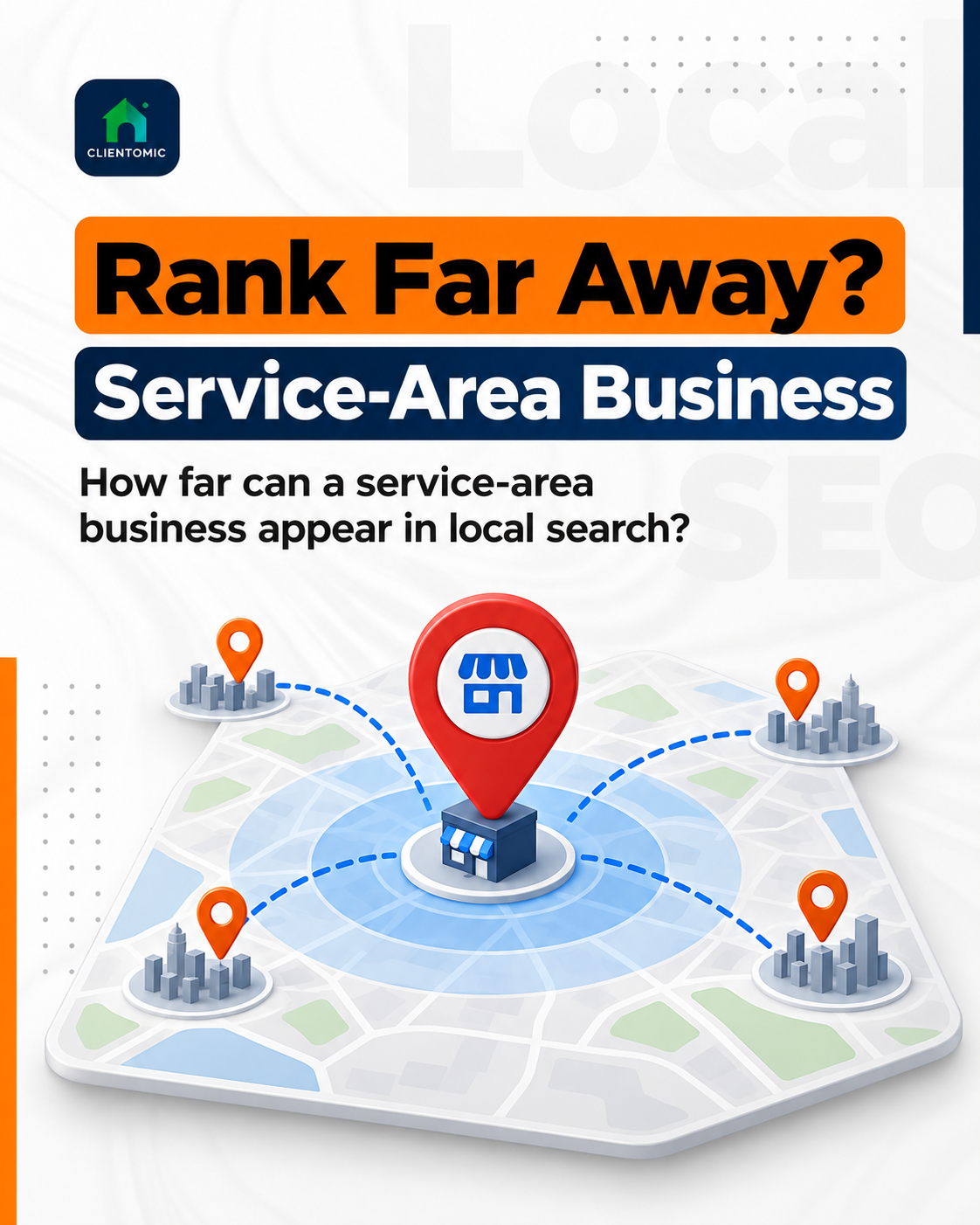
Service-area plumbers should set up GBP according to the real business model, not according to what looks most impressive on a map. Google defines a service-area business as one that visits customers directly and does not serve customers at its business address, and it uses plumbers as a direct example.[1] That means a plumber who works from a home base or dispatch location can still have a valid profile without behaving like a storefront. The key is to describe the service area honestly, keep coverage realistic, and understand what the setting does and does not do. It helps Google understand where the business operates, but it does not create instant rankings across an entire metro. BrightLocal reported in 2025 that 97% of consumers read reviews for local businesses and 41% always do, so the setup has to support trust as well as compliance.[5] Hidden addresses, truthful service coverage, and recent proof are what keep a service-area listing credible.
This is where winners and losers separate quickly. The winners accept that GBP is describing operations. The losers treat service areas like a magic radius switch.
Even a well-optimized GBP usually wins city blocks before it wins suburbs: map visibility expands outward from a strong core, not across the whole service area at once.
When owners say "we serve the whole metro," we still model rankings around the actual pin because service areas describe operations, not automatic visibility.
So what should a plumber do in practice? Hide the address if customers do not visit it. Set service areas that match real dispatch patterns. Do not try to imply a storefront if the business is not one. Then focus on improving the signals that actually move visibility: category fit, services, review freshness, and profile activity.
A truthful setup usually beats an inflated one because service areas tell Google where you operate, not override proximity.
The GBP elements that most directly help turn plumbing searches into calls are service specificity, review freshness, recent photos, clear trust signals, and proof that the profile is active. Google says a service may be highlighted on the profile when a local customer searches for it, which makes service detail a visibility and conversion signal at the same time.[2] BrightLocal's 2025 Local Consumer Review Survey found that 97% of consumers read reviews for local businesses and 41% always do, which makes review quality and recency part of the conversion path, not just a vanity metric.[5] For a plumber, the best profile answers both questions at once: can Google match this business to the search, and will the searcher feel safe calling?
Job-site photos matter because plumbing is a trust-heavy purchase. People want proof that the business is real, active, and experienced with the kinds of jobs they need solved.
Review freshness matters because homeowners read the listing like a current reputation snapshot, not a historical archive. A profile with 150 old reviews and no new activity often loses ground to a profile with fewer reviews but steady monthly proof of recent customer demand.
When local rankings stall, we usually look at review recency before total review count because Google treats fresh customer activity as a stronger sign of current relevance.
Service descriptions matter because they reduce ambiguity. If the profile clearly shows emergency plumbing, drain cleaning, water heater repair, sump pump work, and fixture installation, the business is easier to match and easier to choose.
Some plumbing profiles stay quiet because "complete" is not the same as "competitive." A listing can have every field filled out and still underperform if the category is weak, the services are too generic, the review pattern is stale, or the service-area setup creates the wrong expectations. Google says customers can find a service business after the profile is completed and verified, but that is only the starting point, not a ranking promise.[1][3] SOCi's 2026 Local Visibility Index announcement adds a useful reality check: only 1.2% of local businesses are recommended by AI search, which means being present is no longer enough if the profile is thin, confusing, or hard for machines to trust.[7] That is why the quiet-profile problem usually comes from weak relevance plus weak proof, not from one missing field. The fix is usually tighter category fit, more specific services, fresher reviews, and clearer operational signals that show the business is active now.
This is the enemy in practical terms: not some mysterious algorithm, but a stack of small neglect signals. Wrong primary category. Weak service detail. Old photos. Reviews that stopped arriving. No one checking whether the listing still reflects the business.
For plumbers, another quiet failure mode is mismatch between the jobs the owner wants and the signals the profile is sending. An owner may want sewer repair and water heater installs, but the profile may still look like a generic maintenance listing.
That is why a silent profile often needs a tighter operating system, not more guesswork. Why your business is not showing on Google Maps is useful if the issue feels more like visibility loss than slow conversion, while what actually improves Google Business Profile performance is the better next read when the listing is live but underperforming.
For most plumbers, GBP optimization is a monthly job. The initial setup creates eligibility, but recurring upkeep is what keeps the profile useful. Services change, hours shift, photos age, reviews slow down, and important edits can sit unchecked if nobody owns them. That operating reality matters more in 2026 because AI-assisted local discovery is filtering choices harder, not softer.[4][6][7] A one-time setup can make the profile look better this month. A monthly routine keeps it accurate enough to stay visible and credible next month too. It also gives the owner a place to log new jobs, new service coverage, and new proof without rebuilding the listing from scratch every quarter. For a plumber, that usually means one review pass, one photo refresh, one service check, and one trust check each month.
Busy owners feel this immediately. They do not need another checklist to remember. They need a repeatable maintenance rhythm.
When a plumbing profile looks credible but still loses calls, we often find at Clientomic that the review problem is not total count but momentum. A smaller review base with steady recent activity routinely outperforms a larger profile that has gone quiet.
When a plumber says "we serve the whole metro," we treat that as a coverage statement, not a ranking promise. Service areas tell Google where the business is willing to travel, but they do not erase the proximity limits of local search.
From our work with adjacent service businesses, the payoff from that rhythm can be material. Clean 360 Prowash, a named Clientomic case study in another home-service vertical, saw +86% profile views and +177% profile interactions from November 2025 through March 2026 after sustained GBP work rather than one-off cleanup. The vertical is different, but the operating lesson is the same: recurring profile management compounds better than sporadic edits.
Damion, a plumbing customer, described the result more simply: "Really good service... I've seen an increase in visibility and started getting more calls."
If you want to see what recurring scope looks like, review the Google Business Profile optimization package. It is a good reference point for the difference between setup and maintenance.
The right choice depends on time, not just money. DIY is cheapest in cash but costs owner attention every month. A one-time setup can fix launch issues and obvious mistakes, but it does not solve drift. Ongoing management is usually the better fit when the profile already affects real call volume and no one inside the business wants to own categories, services, reviews, photos, and monthly checks. Google says completed and verified profiles help customers find and engage with a service business.[1] The business question is who will keep that state true after the initial cleanup. If the owner is already answering phones, dispatching techs, and chasing invoices, GBP maintenance becomes a dropped-ball risk. The recurring option is usually the cleanest way to protect visibility without asking staff to become local-search specialists.
Here is the practical tradeoff:
| Option | Best for | Main risk |
|---|---|---|
| DIY | Very small shop with time and discipline | Upkeep gets pushed behind jobs and dispatch |
| One-time setup | New profile or obvious repair work | Fixes launch, not maintenance |
| Ongoing management | Busy owner who wants consistent lead flow | Requires paying for recurring ownership |
Plumbers should be honest with themselves here. If nobody will review the profile after the first pass, the listing will drift again. That is normal. It is not a character flaw. It is an operations issue.
The promised land is simple: a profile that stays accurate, visible, and easy to contact while the owner stays on jobs instead of inside GBP menus. If that is the goal, the closing step is straightforward:
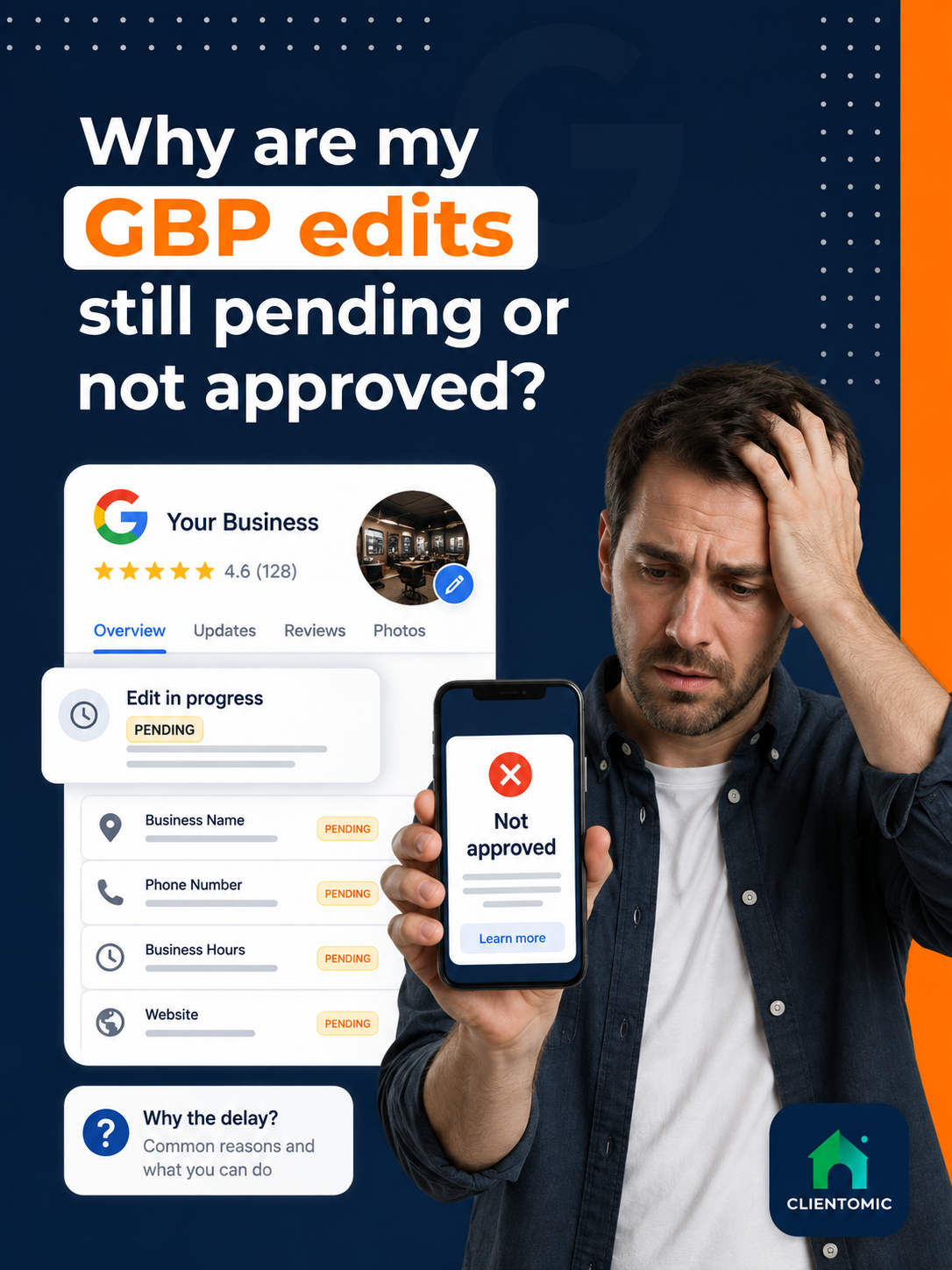
Simple edits can show up quickly, but the business outcome usually lags the edit. Google says verified profiles help customers find and engage with service businesses, while visibility quality depends on how accurate and competitive the profile remains over time.[1][3]
That usually means the problem is ranking strength, not ownership state. Re-check the primary category, service detail, review freshness, and whether the service-area setup matches how the business actually operates.[1][2]
If the business depends heavily on GBP calls, review freshness usually deserves immediate attention because it affects both trust and profile competitiveness. BrightLocal reported in 2025 that 97% of consumers read reviews for local businesses.[5]
The core advice stays the same, but the expectations should change. Google allows plumbers to operate as service-area businesses, yet that does not create instant visibility across every city in the metro.[1]
A one-time setup gets the basics in place. Ongoing management keeps categories, services, photos, responses, and business details current as the business changes month to month.
Check whether your category fit and service detail are stronger than theirs before focusing on total review count. In many cases, the faster fix is relevance cleanup rather than chasing volume alone.
If customers do not visit the location, the business should be represented as a service-area operation instead of pretending to be a storefront. Google explicitly supports that model for plumbers.[1]
Lead buying rents attention from another platform. GBP optimization improves the business-owned listing that customers see on Google Search, Maps, and increasingly AI-assisted discovery surfaces.
Sources:
1. Google Business Profile Help, service-business overview with plumbers as a service-area-business example, 2025. Read the help page
2. Google Business Profile Help, manage services on your Business Profile, 2025. Read the help page
3. Google Business Profile Help, get started with Google Business Profile, 2025. Read the help page
4. Search Engine Land, AI-first search behavior study summary, 2026. Read the article
5. BrightLocal, Local Consumer Review Survey 2025, 2025. Read the survey
6. BrightLocal, Half of consumers are asking AI for business recommendations, 2026. Read the research
7. SOCi, 2026 Local Visibility Index announcement on AI-driven local discovery, 2026. Read the announcement
Observations sourced from review of public-community discussions on LocalSearchForum, Reddit r/smallbusiness/r/SEO/r/localseo, and Google Business Profile Help Community in 2025-2026, alongside Clientomic's profile-audit and onboarding work. Patterns reflect qualitative observations across multiple independent threads, not specific customer disclosures.