By Valerie Mitchell · Client Success Manager, Clientomic
Published May 19, 2026
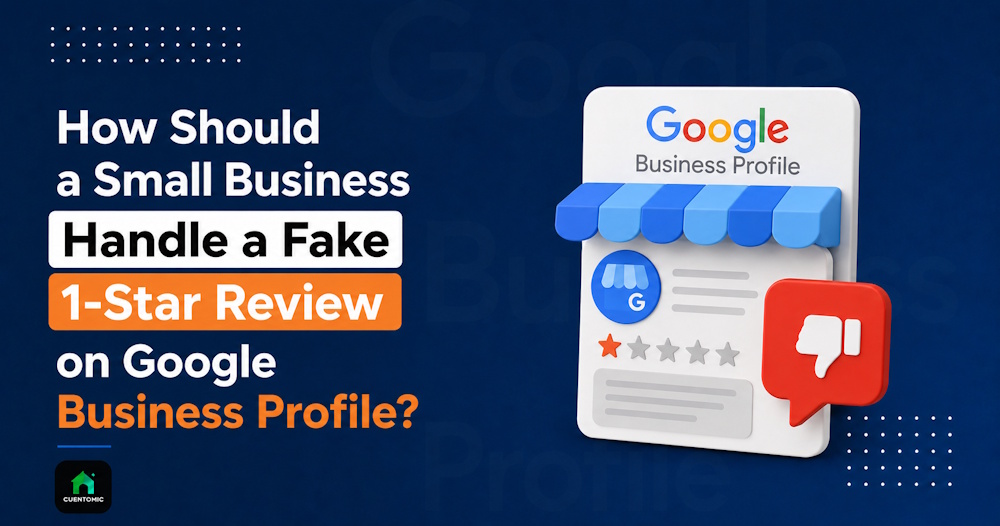
Handle a fake Google review in a fixed order: document the review, post a short factual reply, report it through Google Business Profile, and use the one-time appeal only if Google rejects the first request. Google said it blocked or removed more than 240 million policy-violating reviews in 2024, but the owner workflow is still manual and evidence-driven.
If a fake 1-star review hits a business that depends on calls, the damage is not only emotional. It can change who clicks, who trusts the listing, and who decides to contact the next company instead. The safest move is not to argue first. It is to build the cleanest policy-based case possible while showing future readers that the business is calm, real, and paying attention.
| Situation | Best next move | What not to expect |
|---|---|---|
| Review looks fake but you do not yet see a clear policy violation | Screenshot it, reply briefly, and compare it against Google's policy categories before reporting | Do not expect removal just because the review feels unfair |
| Review clearly violates policy | Report it in the Reviews Management Tool and save every screenshot, URL, and case note | Do not turn the reply into a public fight |
| Review is tied to a payment demand or blackmail | Preserve every message and use Google's extortion path | Do not negotiate in public or keep bargaining privately |
| Multiple suspicious reviews arrive together | Treat them as one documented incident and map the pattern before appealing | Do not file fragmented duplicate reports if one record can explain the pattern |
Start by preserving evidence, not by defending yourself in public. The safest first sequence is document, reply, report, and then appeal once if needed. That order matters because a fake Google review is not automatically a removable Google review: Google removes policy violations, not every review a business believes is false. Your first job is to freeze the record before edits, deletions, or additional reviews change the context. Capture screenshots of the review, the reviewer profile, the review URL, the date, and any nearby pattern signals such as copied wording or same-day timing. Then post a short factual reply that shows future customers you take complaints seriously without escalating the situation. Only after that should you file the removal request. This protects two things at once: your public credibility and your private evidence trail.
The mistake most owners make is treating the first hour like a debate instead of an incident response. They want to prove the reviewer is lying. Google does not evaluate emotion. It evaluates whether the review appears to violate a named policy.
What should a small business do first after a fake 1-star review hits: argue publicly, ignore it, or build the cleanest policy-based removal case possible? The third option is the only one that helps both the customer-facing side and the Google-facing side of the problem.
If the review mentions no real job, no date, no believable service context, and no recognizable customer detail, note that privately. Do not pour that uncertainty into the public reply. Save it for the case record.
Google will usually remove reviews that fit a named policy violation, not reviews that are merely harsh, mistaken, or impossible to verify from the owner's perspective. Google's fake-engagement and prohibited-content policies are the real threshold. The clearest removal paths are impersonation, conflict of interest, coordinated spam, repetitive copied content, extortion, and other forms of fake engagement. By contrast, a vague 1-star review with no text may still stay live if you cannot show why it violates policy. That distinction is the hard part for owners under pressure. You are not trying to prove that the reviewer was unfair. You are trying to show that the review belongs in a policy category Google already says it removes. The better you map your evidence to that category, the stronger the request becomes.
Google's own baseline is strict: policy violation first, business frustration second. That is why the phrase "fake review" can be misleading in practice. A review can feel fake to the owner and still remain live if the policy case is weak.
Look for signals such as:
The first useful clue is often the pattern itself: same-day timing, duplicate phrasing, or multiple accounts with no believable customer trail.
In one 2026 Local Search Forum case, the same negative text was reported across roughly 15 different Google Business Profiles, which is the kind of coordinated pattern that is far easier to explain than a single suspicious sentence.
Reply publicly if you can do it calmly, briefly, and without guessing about the reviewer's identity. The goal of the reply is not to win an argument with the poster. It is to reassure future customers who are deciding whether your business looks credible and in control. Google advises businesses to reply to customer reviews on their Business Profile. A strong response does three things: it acknowledges the concern, says you cannot match the review to a real customer or recent job if that is true, and invites an offline follow-up through a real business contact channel. It does not accuse the reviewer of being fake, threaten legal action, or reveal private service details. If the review is later removed, good. If it stays live, the response still protects trust.
Your reply is for the next prospect more than for the reviewer. A homeowner, office manager, or clinic coordinator reading your profile wants evidence that the business is steady under pressure.
Use language like this:
We take feedback seriously, but we cannot match this review to a recent customer or job record. If you worked with us, please contact our team directly so we can review the issue and try to resolve it.
That reply is useful because it is factual, non-defensive, and easy for a real customer to act on. It also avoids the two failure modes that weaken trust fastest: sounding rattled and sounding rehearsed.
If the review is part of a wave, keep the replies consistent instead of rewriting your posture every time. Consistency reads like process. Overreaction reads like instability.
Use Google's Reviews Management Tool as the main workflow, then keep everything tied to one clean evidence record. Google says businesses can report inappropriate reviews there, track review status, and file a one-time appeal if the first request is denied. Google also says one appeal can cover up to 10 reviews in a batch, which matters when several suspicious reviews arrive together. The practical rule is simple: choose the policy category that actually fits, attach the clearest evidence you have, and avoid duplicate reporting that muddies the case history. Screenshot the review, save the direct URL, note the timing, and preserve any related messages or case IDs. Fragmented reporting feels active, but organized reporting usually travels further because Google can see one coherent policy-mapped record instead of a pile of anxious submissions.
The workflow is more operational than many owners expect:
The reporting process usually works better when a business treats the incident as one documented case record instead of several disconnected complaints.
TheStacc's 2026 explainer lands in the same place from a market-practice angle: the businesses that respond best are the ones that separate the public reply from the formal removal workflow instead of improvising both at once.
If Google refuses to remove the review, assume the business still has a trust-management problem even if the policy route is closed. Denial is common because Google often decides that a review is unpleasant but not removable under the policy category submitted. Google also says review evaluation typically takes several days, so plan for a wait rather than an instant fix. At that point, your job is to stop wasting cycles on duplicate appeals, keep the public response professional, and strengthen the rest of the review environment around the profile. If the case truly fits extortion, move into Google's dedicated extortion path rather than treating it like an ordinary fake review. If it does not, accept that some unfair reviews stay live and shift from removal mode to credibility mode: consistent replies, accurate profile details, and steady legitimate review activity from real customers over time. A denial is not proof that the review is authentic. It is proof that Google did not accept the policy case you presented.
This is the part owners dislike, but it matters. Public anger does not improve the odds. Nor does filing the same appeal again and again with the same evidence.
If the first removal request fails, the next step is usually not more public arguing. It is a cleaner appeal record: screenshots, direct review URLs, timestamps, and one policy category that actually fits the evidence you have.
If the review attack shifts into blackmail, treat it as a different branch immediately. Google has a specific reporting path for negative review extortion, and that is where the evidence should go.
One Google Business Profile Community thread documented nine 1-star reviews landing at the same time from fake accounts, which is a useful reminder that some incidents are closer to review bombing than to a lone bad review. In cases like that, the pattern itself becomes part of the evidence.
One fake review often exposes a broader monitoring gap, which is why review handling belongs inside ongoing review management rather than a once-a-year cleanup. A business that depends on Google calls and map visibility cannot afford to discover serious profile issues only after ratings drop in public. Google says businesses can respond to customer reviews and track review status through its workflow. Review incidents raise the stakes because they compress trust loss into a small window. When a business monitors reviews consistently and answers legitimate feedback on time, a fake-review event lands inside a stronger trust environment. That does not guarantee removal. It does reduce the odds that one suspicious review defines the profile. Managed Local Visibility is the operating discipline that keeps that environment intact.
Some fake-review incidents arrive as a wave rather than one stray complaint: repeated 1-star posts, copied wording, or several low-star reviews landing close together.
When a business comes to us after a fake-review incident, we typically see a wave pattern rather than one stray complaint — repeated 1-star posts, copied wording, or several low-star reviews landing close together.
When an owner gets stuck in Google's review-removal loop, the fix is usually not louder reporting — it is cleaner reporting: screenshots, direct review URLs, timestamps, and one case thread tied to the policy category that actually fits.
That is why a fake-review problem is also a visibility problem. If calls from Google matter, the business needs someone watching for pattern shifts, stale profile details, unanswered questions, and trust signals that are slipping quietly in the background.
For owners who do not want to run that monitoring loop themselves, Clientomic keeps the recurring Google Business Profile work active, including updates, response discipline, and visibility maintenance. You can see the scope here: what recurring Google Business Profile work includes.
If you have already been hit once, it is also worth tightening the surrounding profile basics. Why your Google Business Profile isn't bringing customers and why regular Google Business Profile updates matter are the two closest published follow-ups.
Reply if you can stay short and factual. A calm reply helps future readers immediately, while the removal request can still run in parallel. Do not accuse the reviewer publicly unless the policy case is already obvious and documented.
Google says review evaluation typically takes several days. Plan for a wait, not an instant fix.
Stop duplicate submissions, review whether you picked the right policy category, and decide whether the case justifies the one-time appeal. If the review still stays live, shift to trust protection: a clean reply, strong profile accuracy, and steady legitimate review velocity.
Yes. Treat clustered reviews as one incident pattern instead of separate emotional emergencies. Google allows up to 10 reviews in one appeal batch, which makes organized evidence more useful than fragmented reporting.
A fake review may still stay live unless you can show a policy violation. A real negative review can be frustrating, incomplete, or even unfair, but if it does not violate policy, Google often leaves it in place.
No. Google's current workflow gives businesses one appeal after the initial decision on a reported review or review batch. Use it carefully and submit the cleanest evidence set you have.
The most useful evidence is policy-mapped evidence: screenshots, direct review URLs, timestamps, duplicate text, synchronized timing, no matching customer record, or payment-demand messages in extortion cases. "This feels fake" is weaker than "this matches a named policy violation."
Treat it as extortion, not a normal review dispute. Preserve every message, call log, and screenshot, stop negotiating, and use Google's dedicated extortion-report path.
Fake Google reviews create two jobs at once: protect public trust and build a policy-based case strong enough for Google to evaluate. Businesses usually get into trouble when they try to do both emotionally instead of systematically.
Observations sourced from review of public-community discussions on LocalSearchForum, Reddit r/smallbusiness, r/SEO, r/localseo, and Google Business Profile Help Community in 2025–2026, alongside Clientomic's profile-audit and onboarding work. Patterns reflect qualitative observations across multiple independent threads, not specific customer disclosures.